The period of the Continental Congress Lasted from Sept. 5, 1774 to June 20, 1788. During this period, the colonies functioned in a loose association of sister states Until the Constitution was eventually ratified. The timeline was as follows:
First Continental Congress Convened: September 5, 1774
Second Continental Congress Convened: May 10, 1775
Declaration of Independence (DOI): July 4, 1776
Draft Articles of Confederation (AoC): July 12, 1776
Articles of Confederation (AoC) actually ratified: Feb 2, 1781
Articles of Confederation (AoC) effective: Mar 1, 1781
Congress of the Confederation operated from 1781 to 1789
Revolutionary War Ended: Sep 3, 1783
Constitutional Convention held May 25 to September 17, 1787
Federalist Papers published in national newspapers between October 1787 and May 1788
USA Constitution ratified: Jun 21, 1788
2. Founding Documents
Journals
of the Continental Congress — Library of Congress
collection.
Primary
Sources — Extensive collection of links and documents from
Rick Gardiner.
Declaration of Independence
U.S.
Declaration of Independence — Original
capitalization.
Original
Rough Draught of the Declaration of Independence
U.S.
Declaration of Independence — Modernized
capitalization.
Debates
Debates
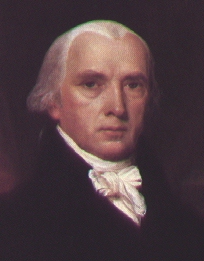
in the Federal Convention of 1787, by James Madison.
These are the proceedings of the Constitutional Convention held
in Philadelphia. an essential guide to interpreting the intent
of the Framers. Also see the mirror site at TeamInfinity.
The
Debates in the Several Conventions on the Adoption of the
Federal Constitution, Jonathan Elliot (1836) — A
collection of documents, including proceedings of the ratifying
state conventions.
Elliot's
Debates — Library of Congress collection.
U.S.
Congressional Documents and Debates — Library of Congress
collection.
Notes
of Debates in the Federal Convention of 1787, James
Madison. -- These are the proceedings of the Constitutional
Convention
held in Philadelphia, an essential guide to interpreting the intent
of
the Framers.
Notes
of the Secret Debates of the Federal Convention of 1787,
Robert Yates. -- Record of parts of the Convention by one who later
opposed ratification and wrote articles as "Brutus".
Federalist Papers-published in newspapers throughout the country to encourage ratification.
Anti-Federalist
Papers — Various essays criticizing the proposed
Constitution and urging changes. See the collections at Iahushua and Logoplex.
Constitution
Constitution
for the United States— Correct version, local to
this site, with annotations and links to other pages on this and
other sites.
Constitution for the United
States — Correct version, local to this site, with minimal
annotations and no local links other than among this document
set, for portability across multiple platforms and browsers.
This one can be downloaded and used at your site.
Constitution for the
United States — Color-coded to indicate passages violated
or not properly implemented, with links to Reed-Kellogg digrams
of some of the clauses.
Constitution
for the United States — Formatted to print on two sides of
one letter-size sheet of paper.
Founding-Era Translations of the
United States Constitution — The Constitution was
translated from English into German and Dutch at ratification,
for the substantial number of people in Pennsylvania and New
York who did not speak English. This document sets out the
different texts and translations alongside one another.
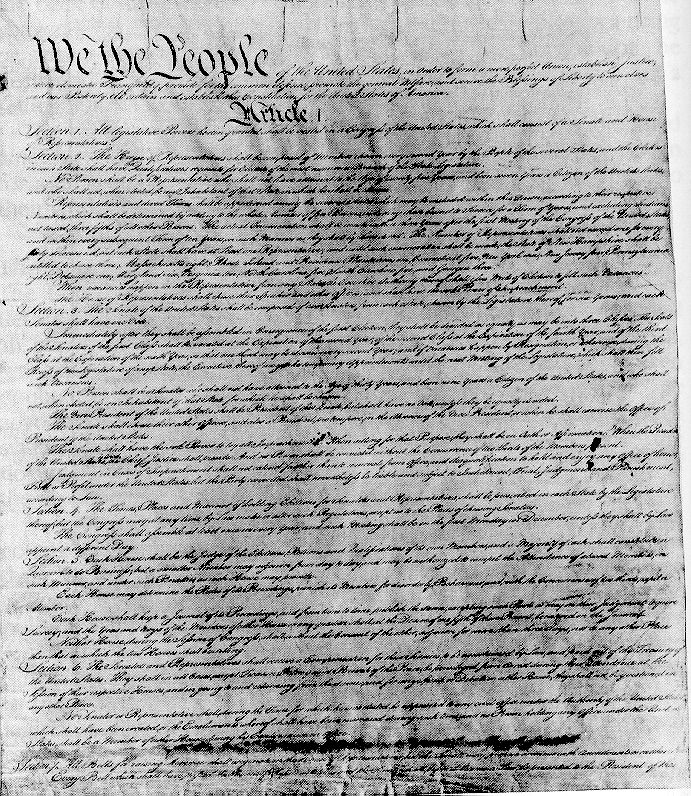
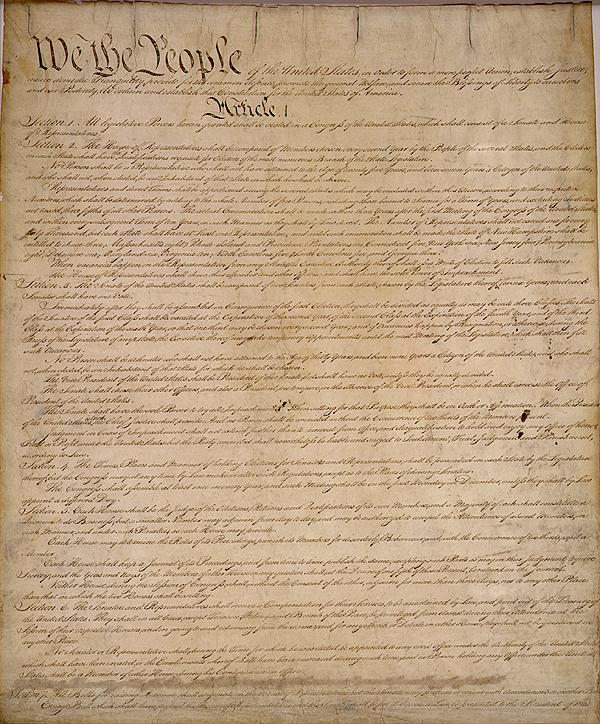
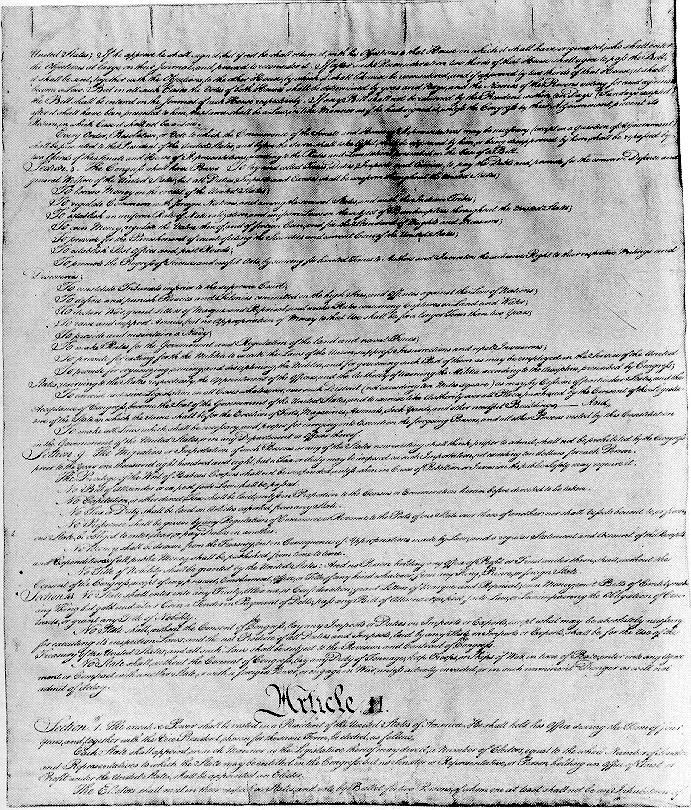
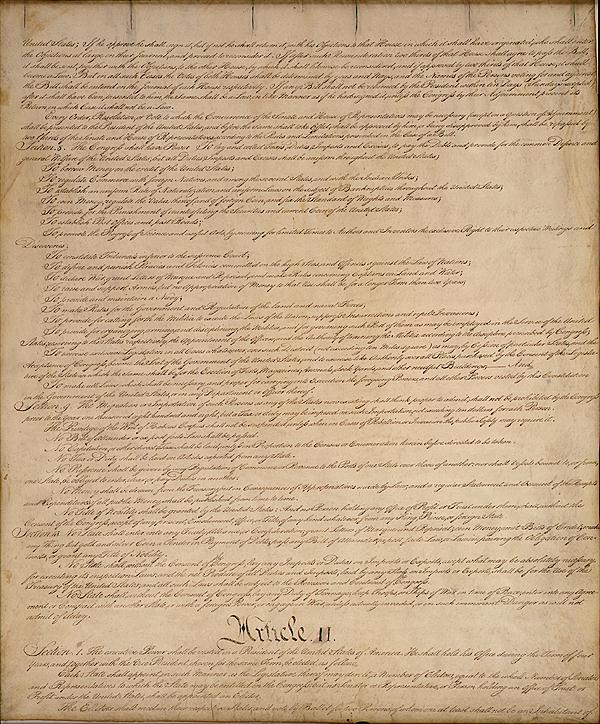
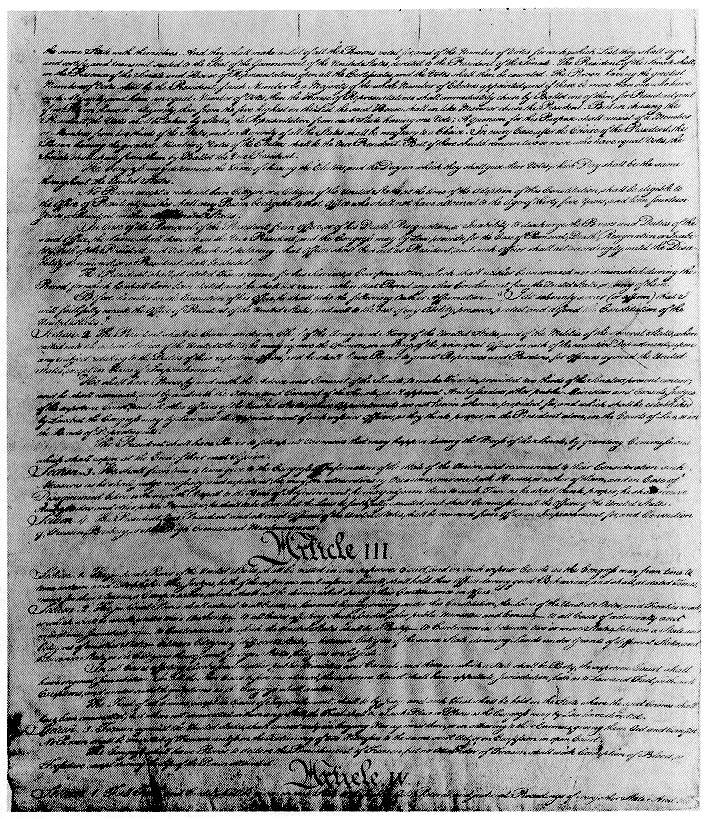
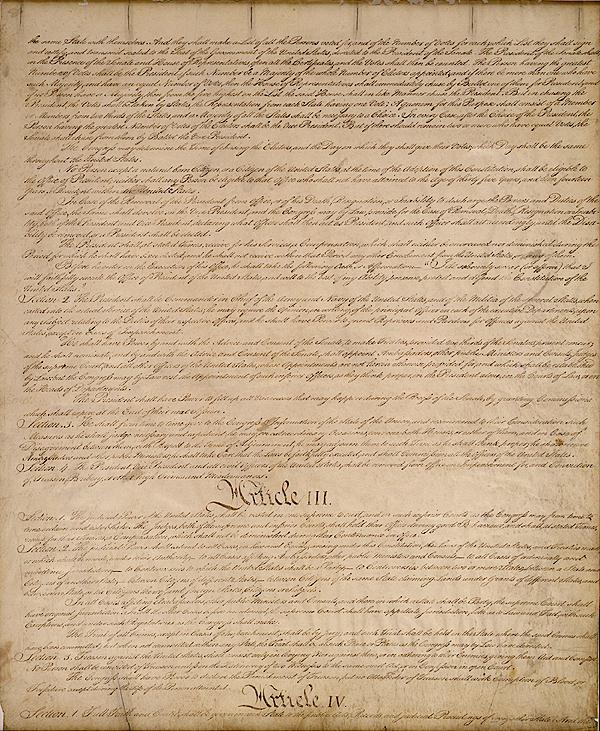
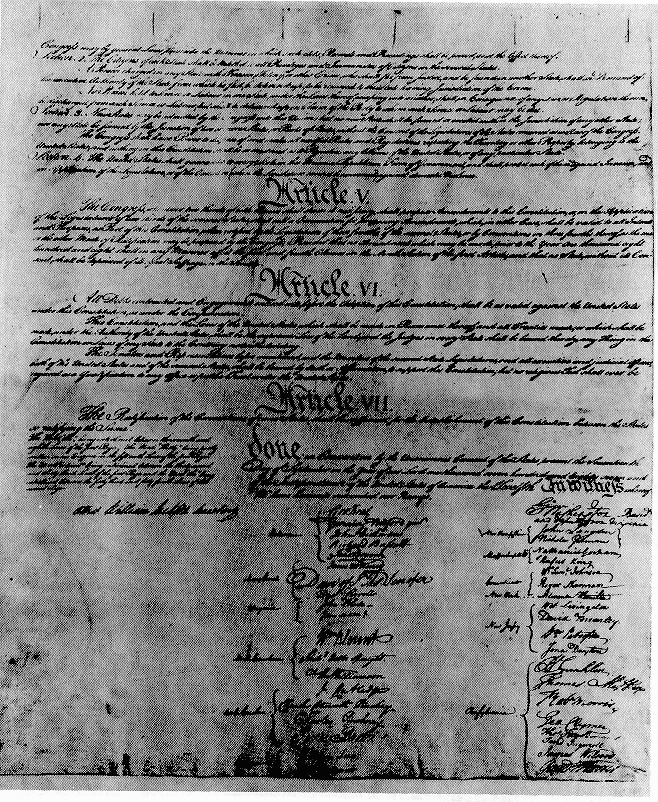
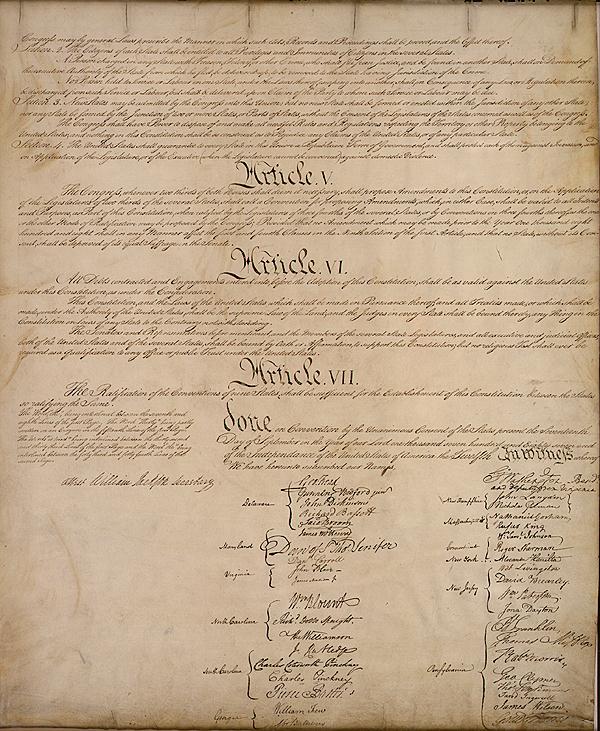
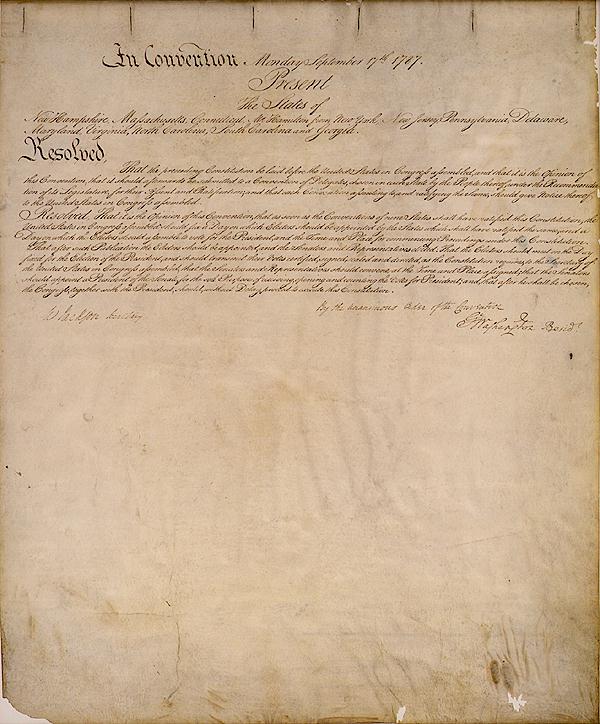
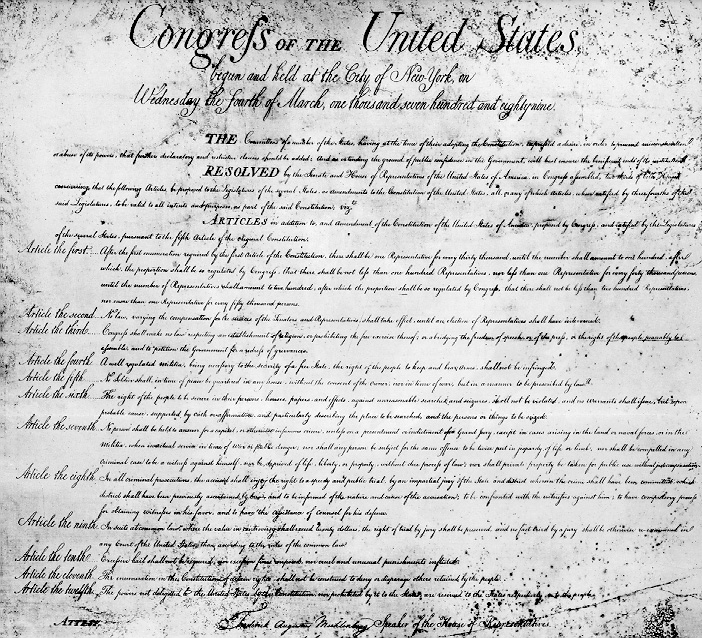
Scanned images of the original pages of U.S.
Constitution and Bill of Rights. See also the Charters
of Freedom collection at the National Archives and Records
Adminstration.
Grey
Color
Document
U.S. Constitution, page 1
U.S. Constitution, page 2
U.S. Constitution, page 3
U.S. Constitution, page 4
Letter of Transmittal
Bill of Rights
U.S. Constitution — Official
but incorrect version you will often see.
The
Annotated Constitution — GPO, CRS [ASCII, PDF], 2444p.
Project of the Congressional Research Service (CRS) and
Government Printing Office (GPO). Annotated references to
Supreme Court decisions arranged by provision and amendment.
Acrobat reader needed for PDF files can be downloaded from here.
Some very large files.
The U.S.
Constitution Annotated — Findlaw rendition. Links to case
files on their site.
The
Founders' Constitution — Online documentation from the
University of Chicago.
Early State
Constitutions — State constitutions in use from
independence through adoption of the U.S. Constitution, for
which they served as models.
Constitutional
Quotes — Some quotes that enlighten understanding of
the Constitution.
Documentary
History of the Constitution of the United States of America,
U.S. State Department (1894, 1900) -- A collection of documents,
including some not in Elliot's Debates or the other works listed.
Letters
of Delegates to Congress — Library of Congress collection.
Bill of Rights-proposed after the constitution was ratified.
Documentary
History of the Bill of Rights — From the English Bill of
Rights through the proposed amendments of the state ratifying
conventions to the drafts debated in Congress before adopting
the final version.
3. Interpretive Information
Treatise on Government, 1867 —Joel Tiffany
National
Constitution Center — Mainly a bricks and mortar museum,
but has online materials.
U.S.
Constitutional Law — Cornell archive.
U.S.
Government — Starting point for U.S. Government
Hypertexts.
U.S.
Historical Documents — Collection at the University of
Oklahoma.
Supreme
Court Decisions — Findlaw collection.
Supreme
Court Decisions — Cornell collection. Only has recent
ones.
Avalon
Project at Yale Law School — Documents in law, history and
diplomacy.
U.S. Government Style Manual 2016
Every CRS Report
Bouvier Law Dictionary. Also
available as two self-extracting executables: Part 1 and Part 2.
Principles
of Constitutional Interpretation
History & Economics Related
to Constitutional Matters — Articles on facts and
conjectures.
The Athenian Constitution,
Aristotle (350 BC). Also see the site at MIT.
Constitution
of the Iroquois Confederacy.
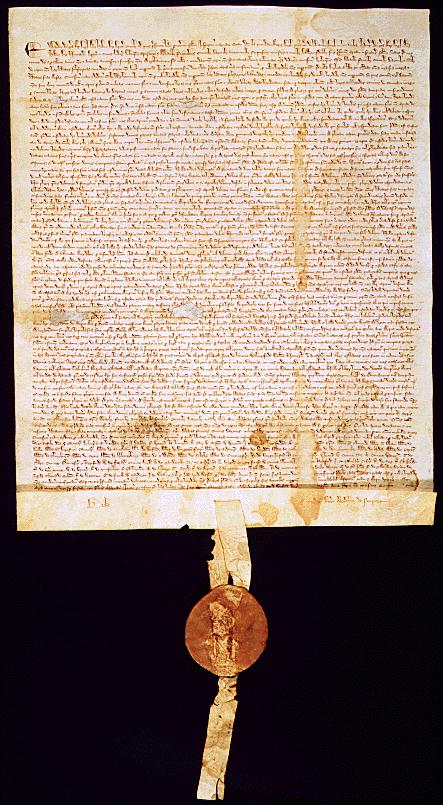
Magna
Carta.
Declaration
of the Rights of Man and the Citizen (Marquis de
Lafayette, Thomas Jefferson, 1789) — Manifesto of the French
Revolution, expressing its ideals.
Landmark Court Decisions —
Local archive, with commentaries on the rulings and the
opinions.
Farrand's
Records — Library of Congress collection.
Ancient
Legal Sourcebook — Collection of documents and links at
Fordham University.
Medieval
Legal Sourcebook — Collection of documents and links at
Fordham University.
Pirate
Code (Articles of Agreement) — Pirates often had written
constitutions, too, and many pre-dated those of the United
States.
How
to render documents — Short manual on scanning printed
documents and converting them into web pages.
The Constitution is a written instrument. As such, its
meaning does not alter. That which it meant when it was
adopted, it means now.
— South Carolina v. United States, 199
U.S. 437, 448 (1905)
3. Offsite Information About Specific Founders
Vindicating
the Founders, Thomas G. West — Defense of the
Founders' views and actions on slavery, women's rights, property
rights, voting rights, and other controversial issues.
Thomas
Jefferson Papers at the Library of Congress
University
of Virginia, Electronic Text Center — Have writings of
Thomas Jefferson.
Thomas
Jefferson on Politics and Government — Things Thomas
Jefferson wrote.
James
Madison Legacy — Archive of James Madison University.
Franklin
Institute Benjamin Franklin archive — The Founder who
contributed most to the concepts of federalism.
George
Washington Papers at the Library of Congress — Complete
collection
The
Writings of George Washington from the Original Manuscript
Sources 1745-1799 — Complete collection at the University
of Virginia.
First in
Peace: George Washington — Celebration of the
indispensible man of the second millenium of the common era.
R. Carter
Pittman — Constitutionalist, and scholar of George Mason,
a major contributor to the Virginia Declaration of Rights,
Declaration of Independence, and Bill of Rights. Collection of
his writings.
4. Sources for pocket editions of the U.S. Constitution and other
documents
Citizen's Rule Book, ed. Webster Adams, Whitten
Printers, 1001 S. 5th St., Phoenix, AZ 85004, 602/258-6406. Read
it online here
or here.
The U.S. Constitution, ed. Robert F. Tedeschi,
Jr., Oak Hill Publishing Co., Box 6473, Naperville, IL 60567.
Federalist
Society — Coalition of conservative and libertarian
lawyers and legal scholars.
Heritage
Foundation — Publishes the Policy Review.
Cato
Institute — Have volume discounts.
National
Constitution Center — Museum devoted to constitutional
materials.
Constitutions
of Europe — Links and discussion of European
constitutions.
Documenting
a Democracy – Australia's Story — Collection of the
National Archives of Australia.
Student Government
— The principles of constitutional republican government also
apply, with some adaptations, to this formative experience of
future constitutionalists.
Constitutionalism
— Sometimes equated with the "Rule of Law", holds that government
can and should be legally limited in its powers, and that its
authority depends on enforcing those limitations.
 Journals
of the Continental Congress — Library of Congress
collection.
Journals
of the Continental Congress — Library of Congress
collection.


 U.S.
Declaration of Independence — Original
capitalization.
U.S.
Declaration of Independence — Original
capitalization. Constitution for the United
States — Correct version, local to this site, with minimal
annotations and no local links other than among this document
set, for portability across multiple platforms and browsers.
This one can be downloaded and used at your site.
Constitution for the United
States — Correct version, local to this site, with minimal
annotations and no local links other than among this document
set, for portability across multiple platforms and browsers.
This one can be downloaded and used at your site.
 Magna
Carta.
Magna
Carta.


